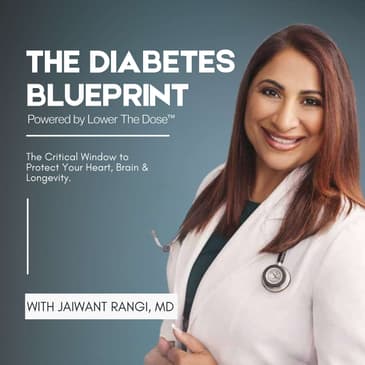
Welcome to another episode of "The Diabetes Blueprint," where we challenge the conventional wisdom around diabetes and unveil a radically new, holistic approach to care. Today, Dr. Rangi, a board-certified endocrinologist, global speaker, and educator with over 20 years of experience transforming diabetes care for patients and doctors worldwide shares with about her upstream approach.
In this episode, you'll hear why the way we think about diabetes is fundamentally broken and how most of what patients and even some doctors believe is incomplete. Dr. Rangi shares the limitations of the current healthcare system, which reduces diabetes to a single number and squeezes complex care into rushed 15-minute visits. Discover why real diabetes management must go beyond blood sugar and prescriptions to include self-management education, hormonal assessment, and a whole-person, cardiometabolic perspective.
Dr. Rangi announces the launch of her pioneering program, Upstream Diabetes, and her upcoming book, "The Diabetes Blueprint," both designed to empower patients with clarity, confidence, and control over their health. The episode also outlines the five-step framework for achieving optimal well-being with the lowest necessary medication doses. Whether you live with diabetes, have prediabetes, or care for someone who does, this episode will equip you with actionable strategies and a hopeful new vision for living vibrantly starting today.
00:00 Challenges of treating diabetes
06:30 Introducing Upstream Diabetes Course
07:32 Understanding Diabetes Basics
11:59 Understanding diabetes beyond sugar
14:23 Silent onset of CKM syndrome
19:46 Different types of type 2 diabetes
22:09 Gut health and daily movement
25:17 Addressing Hormonal Issues First
28:45 Cardiometabolic optimization factors
31:39 Cardiovascular benefits of semaglutide
35:45 Reducing medication through lifestyle changes
39:47 Diabetes care and wellness strategies
44:12 Introducing the educational course
46:09 Preview of Dr. Rangi's Projects
Rethinking Diabetes: Insights from “The Diabetes Blueprint” with Dr. Rangi
In the latest episode of “The Diabetes Blueprint,” Leila sat down with Dr. Rangi, a board-certified endocrinologist and educator with over two decades of global experience. The conversation flipped the script on how we understand and approach diabetes, challenging old paradigms and offering a path toward better health and lower medication reliance.
The Problem: “We’ve Reduced This Disease to a Number”
Dr. Rangi began by highlighting a fundamental problem in common diabetes care: both doctors and patients tend to fixate almost exclusively on blood sugar numbers and lab results. As she put it, “We’ve reduced this disease to a number. On the lab report, your sugar is high, and here’s a pill. But diabetes is so much bigger than that” 00:00:49.
A typical visit a mere 10 to 15 minutes squeezed between longer waits, barely scratches the surface. Patients receive basic reminders to “eat better and exercise more,” but this approach fails to address the complexity of a chronic illness that impacts nearly every aspect of life: heart, kidneys, eyes, nerves, hormones, emotional wellbeing, and daily decisions around food, sleep, and stress 00:02:25.
The Solution: Education and Holistic Care
One of the most eye-opening insights from the episode came when Dr. Rangi cited a consensus statement from the American Diabetes Association and six other medical organizations: diabetes self-management education is “as important to the treatment plan as selection of a medication” 00:04:48. Yet most people with diabetes receive almost no structured education, and the healthcare system isn’t designed to provide it.
To address this, Dr. Rangi developed the “Upstream Diabetes” program an online, self-paced course with 26 video lessons covering everything from basic disease understanding to practical lifestyle changes and complication prevention 00:06:30. The course fills a gap that standard healthcare leaves open, giving people the knowledge they need to truly manage their health.
The Big Reveal: It’s Not Just About Sugar
Perhaps the most transformative message of the episode was this: diabetes isn’t just a “sugar” disease. In fact, its deadliest complications rarely come from high blood sugar itself, but from damage to the heart and kidneys. Cardiovascular disease is the leading cause of death among people with diabetes, and damage often begins years before a diagnosis 00:12:12.
The concept of “cardiometabolic disease” reframes diabetes as part of a wider spectrum connecting blood sugar issues to heart, blood vessel, and kidney health. This means prevention and treatment strategies must be broader and more proactive.
The Diabetes Blueprint: Five Steps to Transformation
Dr. Rangi introduced her upcoming book, “The Diabetes Blueprint,” as a paradigm shift for both patients and providers. The approach is built on five pillars:
Precision Mapping: Recognize what type of diabetes (or prediabetes risk) you actually have. Diabetes isn’t one-size-fits-all, and customizing care matters 00:19:16.
Lifestyle Optimization: Go beyond generic advice. Focus on nutrition (especially gut health), daily movement, sleep quality, stress management, and social connection 00:22:09.
Hormone Optimization: Evaluate and address common hormonal problems (like thyroid issues or menopause) that can underlie metabolic struggles 00:25:17.
Cardiometabolic Protection: Use medications with proven benefits for heart and kidney health (“five shields”), rather than simply chasing glucose numbers 00:28:45.
Lower the Dose: When you get the foundations right, the need for medications and dosages can often be reduced a dream outcome for patients, made possible by changing the approach 00:36:06.
Empowerment, Not Escalation
Dr. Rangi underscored that the real goal isn’t just hitting lab targets; it’s achieving vitality, energy, and life on the lowest dose of only the medications that truly matter. By getting educated and treating the person as a whole, people with diabetes can escape the prescription cascade and thrive 00:37:16.
Takeaway: Go Upstream
The central call to action? Don’t wait for the next visit, or for complications to strike. Education and proactive care change outcomes. As Dr. Rangi put it: “We don’t wait for the waterfall. We go upstream and change the course of the river” 00:18:06.
If you or someone you love is affected by diabetes or prediabetes, consider exploring the Upstream Diabetes course or keep an eye out for “The Diabetes Blueprint.” Go upstream, lower the dose, and take control of your health journey.
The Metabolic Longevity Quiz - rangimd.com/quiz
The Book companion site- rangimd.com/blueprint — (MAP checklist, downloadable tools)
The Upstream Diabetes Course - rangimd.com/upstream
ADCC Provider Training- rangimd.com/academy
The Metabolic Longevity Program- rangimd.com/join — (work with Dr. Rangi directly)
Dr. Rangi's Website - https://rangimd.com/
Podcast Partner - TopHealth - https://tophealth.care/
Dr. Rangi's LinkedIn - https://www.linkedin.com/in/jaiwant-rangi-md-face-32226b97/
Ilonah Dabuet
Executive Assistant to Dr. Jay Rangi
www.RangiMD.com
–––
Jaiwant Rangi, MD
Endocrinologist • Speaker • Diabetes Specialist
1600 Creekside Dr, Suite 2700
Folsom, CA 95630
Tel: (530) 677-0700 | Fax: (530) 676-7850
www.RangiMD.com | Founder, Lower the Dose® Method
“We’re not just lowering medications — we’re lowering stress, fear, and complications.”
Dr. Rangi's Website - https://rangimd.com/
Podcast Partner - TopHealth - https://tophealth.care/
Dr. Rangi's LinkedIn - https://www.linkedin.com/in/jaiwant-rangi-md-face-32226b97/
“Disclaimer: Informational only. Not medical advice. Consult your doctor for guidance.”
So let me paint a picture that every person with diabetes has lived. Your doctor walks in, looks at your chart, and checks your blood sugar or A1C, and often you hear, well, try to eat better, exercise more, and you're out the door. The whole visit is 10 to 15 minutes. I'm not blaming doctors. The system gives us only 15 minutes, if at all, to manage one of the most complex chronic disease in medicine. And we're supposed to address all of that in 15 minutes. Four times a year. It's impossible. Diabetes self-management education is as important as the treatment plan and selection of medication. Education is important as much as drugs. 40 visits. That's 10 years of quarterly appointments just to get the education you need right now. And most patients never get any of it. The system isn't built for education, it's built for prescriptions and procedures. And that's exactly the mindset I want to change. I'm doing great, Leila. I'm thrilled to be here, and I've got a lot to share today, including a big announcement. So let's get started.
SPEAKER_01All right, amazing. I can't wait. So let's jump right in. I want to hear about this big announcement. So I know you've been saying for a while, and we've talked about this previously, that the way we think about diabetes is really fundamentally broken. So can you get into a little bit about what you mean by that?
SPEAKER_00Yeah, Leila, what we think about diabetes is very incomplete. You know, we as doctors we are always talking about numbers and sugar. Almost everything on an average person believes about diabetes, and honestly, even some of the doctors is incomplete. We've reduced this disease to a number on the lab report. Your sugar is high, and here's a pill. But diabetes is so much bigger than that. And today I want to show you what complete approach actually looks like.
SPEAKER_01Okay, amazing. And speaking about that, you mentioned it being broken. So let's kind of start there with that. What exactly do you feel like is broken?
SPEAKER_00So let me paint a picture that every person with diabetes has lived. You go to a doctor, you wait for 30 to 45 minutes in the waiting room, you finally get checked in, it's your turn, and your doctor walks in, looks at your chart, and checks your blood sugar or A1C and has a discussion and maybe adjust the medications, what needs to be done. And often you hear, well, try to eat better, exercise more, and you're out the door. The whole visit is 10 to 15 minutes. Sounds very familiar, right?
SPEAKER_01Exactly what I hear from people all the time, and even from my experience being a patient, it's very common. So I think that's a very fair thing to say.
SPEAKER_00And you know, I'm not blaming doctors. I'm a doctor myself, and I know how hard it is. The system gives us only 15 minutes, if at all, to manage one of the most complex chronic disease in medicine. You know, diabetes affects you from head to toe. It affects your heart, your kidneys, your eyes, your nerves, your brain, your hormones, your sexual life, your emotional health. It touches every part of your life. And it requires daily decisions about food, exercise, sleep, stress, medications. And we're supposed to address all of that in 15 minutes, four times a year. It's impossible. You just can't do it. Yeah, absolutely.
SPEAKER_01When you put it that way, it it really is. And even being a patient and having worked on the healthcare side of things as well, it's so much to go through in such a short period of time. It's not doctor's fault. It's almost impossible to get through that in such a short period of time.
SPEAKER_00Yeah, and here's what the research tells us American Diabetes Association, along with six other medical organizations, they published a consensus report that said something very remarkable. They said diabetes self-management education, and I'm quoting, as important to the treatment plan as selection of a medication. So this is from ADA. They're saying diabetes self-management education is as important as a treatment plan and selection of medication. Education is important as much as drugs. And the data shows that patients who receive more than 10 hours of structured diabetes education have better blood sugar control, fewer complications, fewer hospitalizations, and even lower mortality. So we've got to understand that as much as it's important for you to see the doctor, the education is equally important. Absolutely. 10 hours, that's a lot of 15-minute visits. Yeah. 40 visits. That's 10 years of quarterly appointments just to get the education you need right now. And most patients never get any of it. Not because their doctor doesn't care, but because the system isn't built for education. It's built for prescriptions and procedures. There's a pill for every ill. And that's exactly the mindset I want to change.
SPEAKER_01Absolutely. So with that being said, what is the solution to that?
SPEAKER_00Leila, we've created a program called Upstream Diabetes. And that's a self-paced online course with 26 video lessons organized into five different modules that gives you a structured education that your doctor wants you to have, but doesn't have time to teach. This is something I've learned with my experience of the last 25 years of treating diabetes. Whatever I felt was very important for me to educate the patients, and I did not have time, is what we've created in this course. So think of this having a diabetes specialist in your pocket, you know, available whenever you have a question. So not just during the 15-minute window every three months, but it's a self-paced course. So you can go back and visit those videos anytime.
SPEAKER_01And that course sounds amazing, like I said. So can you kind of walk us through what someone would actually learn in that course?
SPEAKER_00Yeah. You know, each of these modules, like I said, the 26 modules, every module addresses something that gets shortchanged in a typical doctor visit. So for example, module one is the foundation. What is diabetes? What is prediabetes? Can you reverse prediabetes? What are the basics of the management? You know, most patients have never had anyone sit down and explain them what's actually happening to their body. They know their sugar is high. They don't know why and what it means for their future. This module gives you that understanding. You know, things that we may not be able to cover in a doctor's visit for 15 minutes. Then module two is where it gets practical. You know, how to monitor your blood sugars. What does it mean? Why do you need to monitor your blood sugars? What your numbers actually mean, how to get realistic goals, how to use technology like continuous glucose monitor and how to eat well, not to follow a fat diet, but sustainable approach that can actually live with you, how exercise helps, what kind and how much. And there are daily decisions that determine your outcomes, and most patients are just guessing. So we've structured it and put it in the course.
SPEAKER_01Absolutely. And I think that's the stuff that people really need and are maybe even desperate for.
SPEAKER_00Yeah, I feel people are looking for that information, and as doctors, we don't have time to share that. And uh that's exactly where module three, we go even further deeper. It's staying healthy beyond blood sugars. Because diabetes is not just a glucose problem. It's about blood pressure, cholesterol, kidney function, your weight, your hormones. We call that as cardiometabolic disease. So module three teaches you how to prevent complications, not just to react to them, it also covers type 1 diabetes and honestly addresses the supplements, the question that comes to us often, and alternative treatments, what works and what does not work. Then we have module four that tackles complications that usually scare people. They get afraid of heart attacks, stroke, dementia, amputations. So we go in depth and talk about all these complications, how to prevent them, what can we do, how to prevent nerve damage and foot problems, kidney disease, how to preserve your vision, stress and emotional health, sexual health. These are the topics that patients are afraid to ask. And you know, honestly, sometimes we don't even have time to talk. Even though we may want to talk, there's not enough time in the clinic to talk about it. So this module gives you knowledge to protect yourself and catch the problems early. And then we have module five, which is a bonus content. What happens to diabetes during pregnancy? What do you do if you're hospitalized? You know, I have some patients who get very surprised that they never had insulin and suddenly they go to hospital for some planned procedure or emergency and they're given insulin and they're like, nobody ever taught me. That could be a possibility. Also, how to take care of your diabetes during special situations and complete A to Z reference. You know, you can come back anytime because it's again self-paced course.
SPEAKER_01Amazing. So the whole course, all of the modules are all self-paced?
SPEAKER_00It is completely self-paced. Yeah. Video lessons can watch anytime, anywhere. You can download them. We also have PDF. We also have lifetime access once you get the course. You can revisit any lesson whenever you need it. And this is the education that every guideline says you should receive, you know, delivered in the way that actually fits your lifestyle.
SPEAKER_01That's incredible. I love that it's self-paced and people can always refer back to it. I know the way that I learn is always to go back to things that reference things. So going back to what you said earlier about the way that we think about diabetes is broken. And that's something I have heard time and time again as well. And you've shown us this with the education gap. So is there something bigger or is there something bigger, isn't there?
SPEAKER_00Yeah, Layla, I just referenced to that a little early, and I'll say that again. There is. And that's the heart of everything that we do, and what I want patients to understand. The truth is, diabetes is not a sugar disease. It is much more than sugar, and we call that cardiometabolic disease. It is going to affect your heart, it is going to affect your blood vessels, it's going to affect your kidneys, it's going to affect the different organs simultaneously. So we really need to have a vision bigger than just the blood sugar column.
SPEAKER_01Absolutely. And you said cardiometabolic disease, and what exactly does that mean?
SPEAKER_00So people don't die of diabetes. Number one killer of people with diabetes is not blood sugar, it is heart disease. Now, it's diabetes that causes heart disease. It's diabetes that causes increased risk of stroke, increased risk of kidney failure. And yet for decades, we've been obsessing over glucose numbers, even while the heart and the kidneys are being quietly destroyed. So among the adults with diabetes, the cardiovascular disease is a leading cause of death. Up to half of patients with diabetes develop kidney disease, and up to 30% develop serious vision problems. Diabetes increases your risk of dying by 75% and shortens the life expectancy anywhere from six to ten years. And most of the damage comes from heart and kidneys, not from the sugar itself. So we need to have that bigger picture when we're taking care of someone with diabetes and have them understand that too. Why we need to use medications that can protect your kidneys and your heart, why we need to do testing that will give me a lot more information than just the blood sugar problem.
SPEAKER_01Absolutely. So it almost sounds like we've really been looking at the wrong thing all along.
SPEAKER_00Yeah, I wouldn't say it's we've been looking at a wrong thing. I would say we are looking at only one piece of the puzzle, and the puzzle is really big. So here's what makes it even more urgent. The it's metabolic disease has a timeline and it progresses over time. You know, it starts the day your doctor says you have diabetes. It does not start the day your doctor says diabetes. It started way early. Okay. So sometimes decades earlier. It starts with the weight gain, starts with the insulin resistance, starts with inflammation and rising blood pressure. These changes are happening silently, you know, doing the damage long before anyone checks your blood sugar or when you get diagnosed with diabetes. American Heart Association has come up with a term called CKM syndrome or coronary kidney metabolic disease or cardiovascular kidney metabolic syndrome. They've defined stages from zero to four. And here's the shocking part 90% of American adults are already somewhere on this timeline. You know, that's really scary. So we need to look at all adults with the suspicion that they're somewhere on the timeline and how can we protect their heart? Absolutely. 90% is a huge percentage. Yeah, 90%. A study of nearly 500,000 people showed that among people with prediabetes who eventually developed heart disease and kidney disease, only 12% had progressed to diabetes first. So that means there's so many people with prediabetes who are already at risk for heart disease and kidney disease, even though they may not develop diabetes. So the complications come before the diagnosis. If you're waiting for diabetes diagnosis to take action, you're late.
SPEAKER_01Absolutely. And I mean that sounds certainly frightening, but also empowering in a way.
SPEAKER_00Yeah, because if we understand it better, then certainly we can do better, right? So because this means that there's a window, a window to act early and intervene before the damage is done. Hence we call this upstream. We don't wait for the waterfall, we go upstream and change the course of the river. And that brings me the big announcement.
SPEAKER_01Absolutely. So this is what we've all been waiting for. I'm super excited. So tell us.
SPEAKER_00Yeah. So my big announcement is I have a book coming out. It's it's called The Diabetes Blueprint. And if the course is your foundation, the practical daily skills, the book is a paradigm shift. You know, it lays out the complete framework for what I call precision cardiometabolic health. Not a pill for every ill and not just chasing numbers on the lab report. It's a complete personalized step-by-step approach to help you feel your best with the utmost energy, vitality, and life while keeping you at the lowest number and lowest doses of only the medications that truly matter. Absolutely. That sounds like a completely different philosophy. Yes, it is, Leila. And it's built on five steps, you know, and let me walk you through them. Number one is precision mapping, you know, know your type. Not every diabetes is the same, you know, that and even if you're in the prediabetes stage, we need to understand where are you? Are you at a higher risk for getting the complications? Or are you one of those who may not progress or may not get the complications because everybody's body is different. And same thing with type 2 diabetes. We used to put them all in the same bucket that all type 2 diabetes is the same. Now we understand it's not the same. There are different kinds of type 2 diabetes. In fact, in publications, it's been projected or it's been suggested that we should think about diabetes as five different types. And some people have insulin resistance primarily, some have insulin deficiency. So we need to understand where you are on the spectrum and what kind of diabetes you may have because based on that, we choose the right medications and we address the right lifestyle and genetics as much as we need to. And we treat those very differently because each of them may have a very different trajectory. And the risks are different, the complications are different. So we really need to map the patient's presentation well to understand what kind of diabetes they have, where are they on the CKM timeline or the cardiometabolic kidney metabolic timeline that we talked about? And what are your specific risks? You know, heart, kidneys, nerves, eyes, and we build your plan from there. It's not a cookie-cutter approach, a map that is yours based on your body.
SPEAKER_01That's that's amazing. I've never really heard a doctor explain it in that way. I feel like most people, including myself, just hear type two and kind of think it's all the same.
SPEAKER_00Yeah, Layla, that's a big problem, you know, because we all practice like that. And in our 15-minute visits, that's what we are limited to. Because if we don't know exactly what we're dealing with, we cannot treat it precisely. And the precision is everything, you know. So we like to do precision-based personalized care for our patients.
SPEAKER_01Absolutely. And then for step two, can you dive into that a little bit?
SPEAKER_00Yeah, so like I said, we have five steps. Step two is lifestyle optimization. And I don't just mean saying eat better and exercise more. That is a very vague advice you get in a 15-minute visit. I mean specific pillars that are non-negotiable. You know, number one, nutrition. Nutrition along with gut health. What you eat matters. And it's not just about cutting the carbs or cutting the calories, it's about feeding your gut microbiome, reducing inflammation, and choosing the foods that can stabilize your blood sugar and nourish your metabolism. The gut is increasingly recognized as a major player in the metabolic health, and most diabetes programs ignore it completely. So we use that as a foundation. In our step two, the second lifestyle that we talk about is movement, not just exercise, the movement. There's a difference. We talk about structured workout three times a week is great, but what matters is just how much you move throughout the day. You know, walking after meals, that is huge. Standing instead of sitting, building movement into your life and not just the gym schedule. Third is sleep. This is the most underrated factor in diabetes management. Poor sleep leads to increase in insulin, raises cortisol, increases appetite, and drives the weight gain. You can eat perfectly and exercise daily, but if you're sleeping only five hours, the metabolism is working against you. So we need to really work on that as well. The fourth is stress management. You know, chronic stress raises your cortisol, raises your blood sugar, and drives inflammation. And that makes every other intervention less effective. So we have to address it. Not just a luxury, but medical necessity. And we have different things that we offer for stress management in our course. And the fifth is connection, human connection. AI is not going to give us that. Community, relationships. You know, loneliness and social isolation is now recognized as an independent risk factor for cardiovascular disease and mortality. People who feel connected, supported, and purposeful have better metabolic outcomes. You know, that matters. So these five pillars, nutrition and gut health, movement, sleep, stress management, and connection are non-negotiable. Everything stands on those. This is the foundation. And we build on it, whatever we use next.
SPEAKER_01Absolutely. I really love that you included connection because it's so important in so many ways. But it's definitely not something that you hear from most doctors, especially talking about diabetes as well.
SPEAKER_00Yeah, because most doctors don't have the time to talk about it, you know, but the evidence is clear. And my goal isn't just to get your A1C down or your blood sugars down. My goal is to help you feel your best with your energy, with your vitality, you know, with your life. You can't do that with prescription alone. You need to work holistically on the foundation.
SPEAKER_01And step three, this one sounds a little bit different. So can you dive a little bit into step three?
SPEAKER_00Step three is interesting because almost nobody talks about it. And I have included that because of my background with endocrinology and hormone specialty. This is a step that almost gets ignored. And I see that in my practice every day, you know, because we see a lot of middle-aged men and women. And the common problems that I see are hormonal problems that need to be addressed before we address their metabolic problems, because the metabolic problems are usually downstream from their hormonal issues. And those hormonal problems are subclinical hypothyroidism or mildly underactive thyroid. Then perimenopause or postmenopause increases your insulin resistance or hypogonadism or low testosterone in men. That can influence your metabolism too. So these are three common things that we see all the time that affect your weight gain, that affect your metabolism, and that affect your mood. Unless we address this, I would not use prescription medications for your metabolic problems. You know, even if you have diabetes, your diabetes control will be much better if we have addressed the hormonal issues first. And if you have high cholesterol, instead of upping your cholesterol medications, I would rather address your thyroid or address the underlying hormonal problem. So this is a very important part of the equation that often gets overlooked, like we talked about. And patients feel exhausted. They're complaining. It's not that they're feeling fine. They're tired, they've gained weight, they feel sluggish. And hormone optimization means we look at the whole picture. You know, we check the thyroid function, we assess the menopausal status, we optimize and carefully and precisely address the hormonal issues that needed to be addressed simultaneously as we work on the foundation, which is the lifestyle optimization.
SPEAKER_01Absolutely. And that definitely sounds like a lot to go through. And it definitely sounds like this is the kind of thing that would never be able to come up in a 15 minute visit.
SPEAKER_00Yeah, Leila, that's certainly challenging. And a lot of times, in spite of us wanting to address that and and do mean to address it, there's just not enough time. Time. And that's why the patients should understand the limitations of the traditional medical practice and how if they're looking at a holistic picture, we may need to look at a system different than what we are normally used to going to. And that's why so many patients are suffering unnecessarily. You know, they're on three or four diabetes medications, but nobody's checked their thyroid or their testosterone. They're told exercise more, but they're so fatigued from hormonal depletion that they're not able to perform their best. And my goal is to make people feel their best and not just hit the number on the lab report. Like I said, energy, vitality, and their life. You know, that is paramount. And you can't get there if you're ignoring the hormonal piece with the metabolic problems.
SPEAKER_01Absolutely. So let's dive into step four a little bit. Is this where medications come into play?
SPEAKER_00Yeah, step four is important because I call that cardiometabolic protection or cardiometabolic optimization. So our number step one was precision mapping. Number two was lifestyle optimization. Number three was hormone optimization. And number four is cardiometabolic optimization. And that is the medications that have shown they protect your heart, they protect your kidneys above and beyond the blood sugars. So we cannot just say that use any medication to bring your numbers down. We got to use the medications that have been proven in the studies and that are considered to be safe and they are considered to be cardioprotective. I call them as five shields. You know, there are five classes of medications that have been shown to be very important. And I'm not saying everybody needs to be on those five medications, but we should be choosing out of those. And number one is something that the doctors use all the time. Those are ACE inhibitors or ARBs or angiotin receptor blockers. They protect your blood vessels and the kidneys. You know, they lower the blood pressure, and more importantly, they they slow the kidney damage and they protect the kidneys. Very well known, nothing new about this. Number two is statins. We know that as well as a cardioprotective shield. Statins are cholesterol-lowering drugs. They stabilize a plaque in your arteries that cause a heart attack and the stroke. For people with diabetes, statins is one of the most proven life-saving interventions. I often get people who will argue with me or don't want to be on statins, and I can only educate them, but certainly it's been shown and proven to benefit the outcomes. So those two are not surprising. Most doctors are using them, and we've known this for years. Now, the new ones, there are three three new classes of drugs that are out there SGLT2 inhibitors, GLP1 ignus, and the third is phenerinone, which is again kidney protective. So those are the classes of drugs that lower the blood sugar, but they also benefit your heart and your kidneys independent of the glucose. And the guidelines recommend that we must use them irrespective of their A1C, irrespective of their blood glucose. And not every drug in that class is shown to protect the heart. So we must know which medication is in that class is cardioprotective and which one is not. For example, SGLT2 inhibitors, they reduce the heart failure hospitalization and slow the kidney progression. So we must use those in somebody who's at a high risk for heart failure. The Shield 4, which is GLP1 receptor agonist I just mentioned, this is where the science has just exploded. We see so much benefit with that. Number one, semaglutide. Semaglutide is the same medication as Ozempic or Vigovi or Ribelsis. This has proven cardiometabolic benefits or cardiovascular benefits. The SELECT trial showed that semaglutide reduced heart attack, stroke, and cardiovascular death by up to 20% of people with obesity who don't even have diabetes. So the benefits appeared within weeks and they were independent of the weight loss. You know, you're not seeing that after suddenly have somebody has lost significant weight. So we know that these drugs are doing something above and beyond just the weight loss benefits. And nowadays I do see some people questioning the use of those because they've had so much, they've heard of more negative publicity on social media from the influencers. So I often tell my patients that you need to understand who you're working with, what is your risk, and work with the right doctor so you understand if this medication is safe, efficacious, and indicated for you. So that's pretty much, and the fifth one was a phenerinon. Yeah. So we need to know our drugs, we need to understand the five shields that I call. When somebody needs medications, I need to choose out of these instead of just any medications out there.
SPEAKER_01Absolutely. And like you said, GLP ones and those medications have been getting a lot of buzz lately. And another one that's been in the news a lot is trizepatide. So can you talk a little bit about that?
SPEAKER_00Yeah, that's a great question, and thank you for asking. You know, terzepatide has a dual action, and this is where precision matters. It's a drug that targets two hormones instead of one. It produces greater weight loss and better blood sugar control than any single agent we've ever had. You know, the head-to-head cardiovascular trials show that it was at least as protective as proven GLP1 drug, but it is important to know that terzapatite has not yet received the FDA approval for cardiovascular indication. Semaglutide, on the other hand, has. Semaglutide is the only GLP-1 agonist that has been proven and has received the cardioprotective indication. There is a dedicated placebo-controlled cardiovascular outcome trial for terzeapatite that is still underway. And we will know the numbers soon, but until then we have only one, which is semaglutide that has the proven benefit shown. The shield 5 that I mentioned about earlier, phenerinon, this is the newest shield. It reduces inflammation, reduces scarring in the kidneys and the heart, and it's specifically proven to slow the kidney disease progression and reduce the heart failure in people with diabetes and kidney disease simultaneously. So most patients have never heard of it, and many doctors are not using it, but the evidence is clear, and we also have it in the ADA guidelines. So the book explains each shield, what it does, why it matters, and how it works together. And the key word is precision. Not everyone needs all five, and your combination of shields should be tailored to your specific risk factors for which you should be working with your doctor and understand where are you on the CKM syndrome or the CKM timeline and your specific goals.
SPEAKER_01And then when it comes to step five, what about that? Can you dive into step five a little bit?
SPEAKER_00Yeah, Leila, that step five is something that is my unique addition, and I call that as a payoff. If you follow step one, two, three, and four, you get to earn yourself step five, which is lower the dose. This is the end result of doing step one through four. When you have mapped the disease right precisely, and when you've optimized the nutrition, your movement, your stress, sleep, and connections, and when you've addressed all the hormonal issues or health, and when you've developed or deployed all the right shields at the right time, that results in less need for medications, not more, fewer pills, and maybe entirely coming off of certain medications. For example, I've seen in my practice I have so many patients who have optimized their lifestyle, they're exercising, they're watching their nutrition well, and everything else. And once we optimize their hormones and once we've optimized their cardiometabolic shields, they don't need insulin anymore. And a lot of them don't need blood pressure medications. So we are taking them off, you know. And that is very important to work with patients closely to understand what medications stay on and what don't. What is truly protecting you and what was just used to decrease, lower the number, you know, for example, as some antihypertensive or a blood pressure. So this is opposite of what most patients experience. Most patients feel that they're on the escalator, you know, or the prescription cascade, I call that. Every year, another medication and a higher dose and another side effect, and then we use another chemical to treat one side effect. And that's what happens when we only treat the sugar and ignore everything else. But once you treat the person as a whole, the metabolism, the lifestyle, the hormones, and the cardiometabolic risk, the trajectory reverses completely, and you need less, not more.
SPEAKER_01I mean, that sounds like the dream for every patient. It seems like it's definitely a much better approach.
SPEAKER_00Yeah, Layla, it's not a dream, but it's a blueprint. That's why the book is called The Diabetes Blueprint. Five steps: precision mapping, lifestyle optimization, hormone optimization, cardiometabolic protection, and lower the dose. It's a path to feel the best with energy, vitality, and life on the least amount of medication that are truly necessary.
SPEAKER_01That sounds amazing. So help me understand how the course and the book actually fit together. So if someone is listening right now and they do have diabetes or prediabetes, or they love someone or know someone who does, where should they start?
SPEAKER_00Yeah, I'm glad you asked that. Think of it this way: the course is your foundation. Okay, that's a self-paced, you're doing it yourself. And the book is your framework. The course, the upstream diabetes, teaches you practical day-to-day skills, things that I don't have time to cover in the book. How to monitor your blood sugar, how to eat, how to exercise, how to use technology, you know, how to protect your eyes, your kidneys, your feet, and how to manage stress. What to do if you're pregnant or if you're hospitalized, what to expect. It's 26 lessons that fill the gap that your doctor visits leave behind. It's education and that guidelines say that it is as important as medication. We talked about that earlier, but that most patients never receive. So this is something that I have created the course, like a bundle that you can watch and learn for anybody with diabetes will benefit from it. Now, on the other hand, the book. The book is the diabetes blueprint that changes how you think about disease entirely. So that's where we talk about the five steps of precision cardiometabolic care. It shows you that diabetes is not a sugar disease and that diabetes is on a timeline and the heart disease is something that you can expect simultaneously. We talk about lifestyle and hormone optimization, and we ultimately talk about how do we lower the dose? How we do we keep you on the least amount of medications with most energy and most vitality. So you feel your best and not just survive, but you thrive. So together, they give you something that no 15-minute visit can give you ever. The confidence, the clarity, and the control. Confidence, clarity, and control. I love that. I think that's such a good saying and a really good way to remember it as well. Yeah, Leila, that's the upstream way. You know, we don't wait for the complications. We don't chase the numbers, we don't use more pills, we need less pills, and we go upstream. We address the person as a whole and we act early and we live vibrantly.
SPEAKER_01And I think that's a great way to put it, and it's gonna help so many people. And for everyone listening, what would you recommend they do right now?
SPEAKER_00Yeah, I think the first thing they need to do is they need to enroll in the upstream diabetes course today. They can go to go.rengymd.com slash join. Start your education now. You know, don't wait for the next doctor's appointment and don't wait for the complications to scare you. 26 bite-sized small lessons, five modules, self-paced, and lifetime access. So this is what I would recommend going and downloading the course at go.rengemd.com/slash join. Now, this is the education your doctor wants you to have but doesn't have time to teach you. Step two, watch for diabetes blueprint. The book is coming out soon. It'll change the way you understand diabetes forever. Five steps to precision cardiometabolic health, precision mapping, lifestyle optimization, hormone optimization, cardiometabolic shields, and lower the dose. Follow me for updates so you're the first to know when it launches. We are planning to launch it in the first week of July. And step three, share this with someone you love. One in three adults has prediabetes. One in seven has diabetes. Most of them don't know what you just learned in the last 40 minutes. That diabetes is a cardiometabolic disease and that damage starts years before the diagnosis happens. And that there are shields that protect your heart and your kidneys way beyond your blood sugar. And that there's a path to feeling the best with less medications, not more. And if you know someone living with this or at risk, share this podcast. Share the course. And the best thing you can do for someone you care is to help them get educated before the complications set in.
SPEAKER_01Absolutely. It definitely sounds so helpful. And I'm sure that you probably get asked this frequently, but what would you say to someone who's thinking, I already see my doctor, I'm already on medication, and they may seem like they're on the fence. Do I really need this? What would you advise them?
SPEAKER_00You know, I think this the data and the science is clear, and we know that 15 minutes four times a year is one hour a year, right? And that is the time your doctor has to change your medications, to educate you, to warn you on things that are changing or evolving. That's a nine-hour gap. You know, that's every single year. The gap is where the complications grow. So that if you want to prevent complications, you want to avoid confusion and learn better to handle your disease better, I think you have an option. And that's where the course comes in. That course closes that gap. And the book gives you the framework that the doctor may not have time to explain. And together, they put you in the driver's seat. They do not replace your doctor. You still go to partner with your doctor and go to work with your doctor in partnering. You're walking into your next appointment with the right questions and the right tools and the right understanding. And you confidently can ask your doctor for taking care of yourself with the right standard of care and to advocate for yourself. Remember, the metabolic disease is on a timeline. The earlier you act, the more you can prevent. The course gives you the skills, the book gives you the framework, and together they give you power to change your trajectory.
SPEAKER_01That's amazing. I love that. And not replacing your doctor, but partnering with your doctor is really a great way to think about it.
SPEAKER_00Yeah, that's exactly right. The best outcomes happen when the patients and the doctors are on the same page and they're part of a team. They're speaking the same language and they're working towards the same goals. And that's what upstream diabetes and the diabetes blueprint make possible.
SPEAKER_01Thank you so much, Dr. Rengi. I know that you have all the experience being a board certified endocrinologist, global speaker, and now the creator of upstream diabetes, that everyone will be so lucky to benefit from your knowledge and your expertise and really your whole thought process behind all of this. And now adding author to your list of credentials is amazing. I can't wait for you to release the book, the diabetes blueprint, and to enroll in the course, you can go ahead and visit, like Dr. Rangi said earlier, go.rangiemd.com backslash join. Make sure you stay tuned for the book launch and follow Dr. Rangi so you do not miss it. Make sure you also continue to follow the podcast. And remember, diabetes is not a sugar disease, as we learned today. It is a cardiometabolic disease. And the damage starts before the diagnosis, but so can the prevention. Act early, prevent complications, and live vibrantly. Dr. Rangi, this was a pleasure. And remember, everyone, go upstream together. And until next time, I can't wait to talk to you again and hear how everything's going. And make sure everyone, like I said, follow the show and subscribe. And I'll talk to you soon, Dr. Rang. Pleasure I'll go with.
SPEAKER_00Thank you, Leila. Go upstream.